
반려동물 보험, 정말 가치가 있을까요? 모든 보호자가 알아야 할 장단점 (2026년 업데이트)

생활비와 의료 기술이 계속 치솟는 시대에 많은 반려인들의 마음속에는 한 가지 의문이 남습니다. "반려동물 보험이 정말 가치가 있을까?" 아니면 단순히 개인 비상금을 모으는 것이 더 나은 선택일까?
진정한 답은 보험료 수치 자체에 있는 것이 아니라, 네 발 달린 가족의 "라이프스타일과 위험 요인"에 있습니다. 이 글에서는 반려동물 보험이 귀하의 가정에 "필수품"인지 "고려 대상"인지 결정하는 데 도움이 되도록 모든 측면을 깊이 있게 다룹니다.
2026년 반려동물 보험이 주요 트렌드인 이유는 무엇일까요?
이는 더 이상 단순한 유행어가 아니라 변화하는 재정 환경에 대한 대응입니다.
치솟는 의료비: 현대의 수술이나 복잡한 치료는 이제 수만에서 수십만 바트의 비용이 들 수 있습니다.
새로운 질병 및 만성 질환: 반려동물의 수명이 길어짐에 따라 신장 질환, 심장 질환, 당뇨병 등의 사례가 늘어나고 있으며, 이 모두는 고비용의 장기 치료가 필요합니다.
반려동물의 인간화: 반려동물을 진정한 가족 구성원으로 대한다는 것은 보호자가 최고 수준의 수의료를 요구한다는 것을 의미합니다.
반려동물 기술 통합: 마이크로칩과 보험 정책 간의 연동으로 보장 확인 및 건강 기록 추적이 스마트폰 몇 번의 탭으로 쉽게 이루어지게 되었습니다.
장점: 보험에 가입해야 하는 이유
재정적 충격 감소
사고와 질병은 결코 경고를 주지 않습니다. 보험은 특히 응급 입원이나 긴급 수술 시 "은행 잔고"와 "반려동물의 생명" 사이에서 선택해야 하는 상황을 방지해 줍니다.체계적인 재정 계획
고정된 월 납입금 또는 연간 보험료를 내는 것이 저축에서 갑자기 거대 목돈을 인출하는 것보다 현금 흐름 관리에 훨씬 수월합니다.혁신적인 치료 접근성
보험의 지원이 있다면 예산 부족에 구애받지 않고 고급 의료 절차를 선택하거나 전문가와 즉시 상담할 수 있습니다.포괄적인 위험 보장
대부분의 플랜은 사고, 일반 질병, 수술비, 입원비를 보장합니다. 이는 보통 보호자에게 가장 큰 재정적 스트레스를 주는 핵심 비용들입니다.
주의 사항: 주의 깊게 살펴봐야 할 점
제외 사항 및 조건: 대부분의 정책은 기존 질환을 보장하지 않으며 첫 청구를 하기 전에 대기 기간이 포함됩니다.
연령별 보험료: 반려동물이 나이가 들수록 보험료가 인상됩니다. 일부 제공업체는 신규 정책에 대한 "최대 가입 연령"을 두고 있기도 합니다.
100% 보장이 아님: 연례 예방접종, 중성화 수술, 일반 건강검진과 같은 일상적인 비용은 대개 주요 보장에 포함되지 않습니다.
환급 시스템: 많은 경우 보호자가 "먼저 지불하고 나중에 청구"해야 하므로 여전히 수중에 유동 현금이 필요합니다.
나란히 비교: 보험 vs 개인 저축
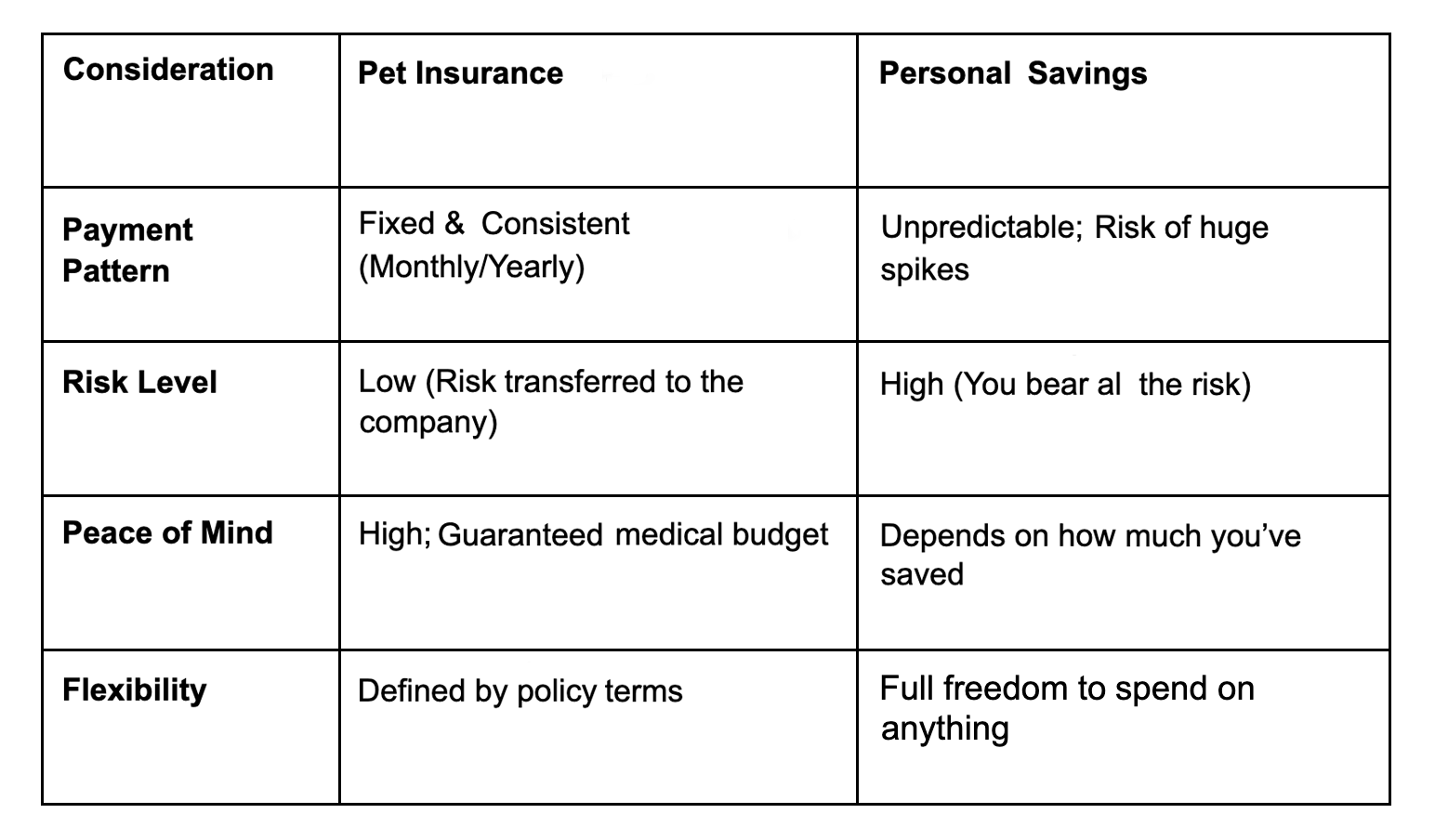
팁: 돈의 "최고의 가치"를 얻는 방법
대한 균형 맞추기: 가장 싼 보험료만 찾지 마세요. 보장 한도가 너무 낮으면 실제 생명을 구하는 치료에 턱없이 부족합니다.
어릴 때 시작하기: 건강할 때 보험에 가입하여 낮은 보험료를 고정하고 "기존 질환"의 함정을 피하세요.
청구 한도 확인: 플랜이 반려동물의 필요에 맞는지 확인하기 위해 "방문당" 또는 "연간" 한도를 확인하세요.
마이크로칩 할인 찾기: 마이크로칩은 잃어버린 반려동물을 찾는 데 도움이 될 뿐만 아니라, 많은 2026년 정책들이 마이크로칩을 장착한 동물에게 특별 할인을 제공합니다.
결론: 가치가 있을까요?
반려동물 보험은 "수익성"보다는 "위험 관리"에 더 가깝습니다. 이를 마음의 평화를 위한 회원비이자 가장 친한 친구를 위한 안전망으로 여긴다면, 가장 약할 때 최고의 케어를 제공할 수 있도록 보장하는 가장 강력한 도구입니다.
기억하세요: 보험이 있는데 필요하지 않은 것이, 필요하지만 보험이 없는 것보다 낫습니다.
🌐 마이크로칩 확인 및 문의: microchip.anyvet.ai
✨ 반려동물의 안전은 세심한 주의에서 시작됩니다.
👉🏻[반려동물 정보 검색 및 로그인하기]


