
반려동물 마이크로칩, 몇 살부터 안전하게 장착할 수 있나요?

반려동물 마이크로칩, 몇 살부터 안전하게 장착할 수 있나요?
마이크로칩 장착은 반려동물을 잃어버렸을 때의 안전을 위해서나 반려동물 등록 규정을 준수하기 위해서 오늘날 반려인들에게 필수적인 요소가 되었습니다. 하지만 대부분의 반려인들이 걱정하는 질문은 바로 이것입니다. "강아지나 고양이가 몇 살이 되어야 마이크로칩을 안전하게 시술할 수 있을까요?" 이 글에서는 적정 연령과 체중 기준, 준비 방법, 그리고 알아두어야 할 법적 요구 사항을 포함한 모든 답변을 모아보았습니다.
AnyVet 마이크로칩이란 무엇인가요?
AnyVet 마이크로칩은 클라우드 기반 온라인 등록 시스템과 함께 작동하는 국제 표준(ISO/ICAR) 반려동물 식별용 마이크로칩입니다. 칩 자체의 크기는 쌀알 한 톨 정도로 작으며, 동물의 몸에 유해한 반응을 일으키지 않는 것으로 테스트 및 입증된 생체 적합성 유리 캡슐로 감싸여 있습니다. 수의사가 목 뒤쪽 피부 바로 아래에 이식하며, 시술 시간은 단 몇 분밖에 걸리지 않습니다.
GPS와 달리 마이크로칩은 실시간 위치를 추적하지 않습니다. 대신 소유자의 정보와 연결된 15자리 숫자를 저장합니다. 길을 잃은 반려동물을 표준 리더기로 스캔하면 담당자가 즉시 소유자에게 연락할 수 있습니다.
반려동물 마이크로칩 장착의 적정 연령
답변: 반려동물은 생후 6~8주부터 마이크로칩 장착이 가능하며, AnyVet은 최대한의 안전을 위해 생후 8주(약 2개월) 이후부터 장착하는 것을 권장합니다.
이 시기가 되면 강아지와 고양이는 안전하게 시술을 받을 수 있을 만큼 충분한 신체 크기와 면역 체계를 갖추게 됩니다. 연령 외에도 수의사가 시술 진행 여부를 결정하는 데 도움이 되는 체중 가이드라인도 있습니다.
동물 종류별 가이드라인
개: 생후 6~8주 이후부터 시술 가능
고양이: 생후 약 8주(2개월) 이후부터 시술 가능
체중 기준: 반려동물의 체중이 약 500g 이상이어야 시술 부위를 신체가 적절히 지지할 수 있습니다.
너무 이른 시술을 피해야 하는 이유
너무 어린 동물이나 체중 기준 미달인 동물의 경우, 피부 아래 조직이 아직 얇고 신체가 여전히 연약합니다. 적절한 연령이 될 때까지 기다리면 스트레스를 줄이고 칩이 다른 위치로 이동할 가능성을 낮출 수 있습니다. 시술 후 몇 주가 지나면 신체가 칩 주변에 얇은 조직층을 형성하여 칩을 스스로 제자리에 고정하게 됩니다.
보호자가 알아두어야 할 방콕의 규정
방콕에 거주하는 경우, 반려동물 등록 규정에 따라 다음과 같은 기한이 정해져 있습니다.
태어날 때부터 키운 반려동물의 경우 태어난 지 120일 이내(약 4개월)에 이식
새로 입양한 반려동물의 경우 30일 이내에 이식
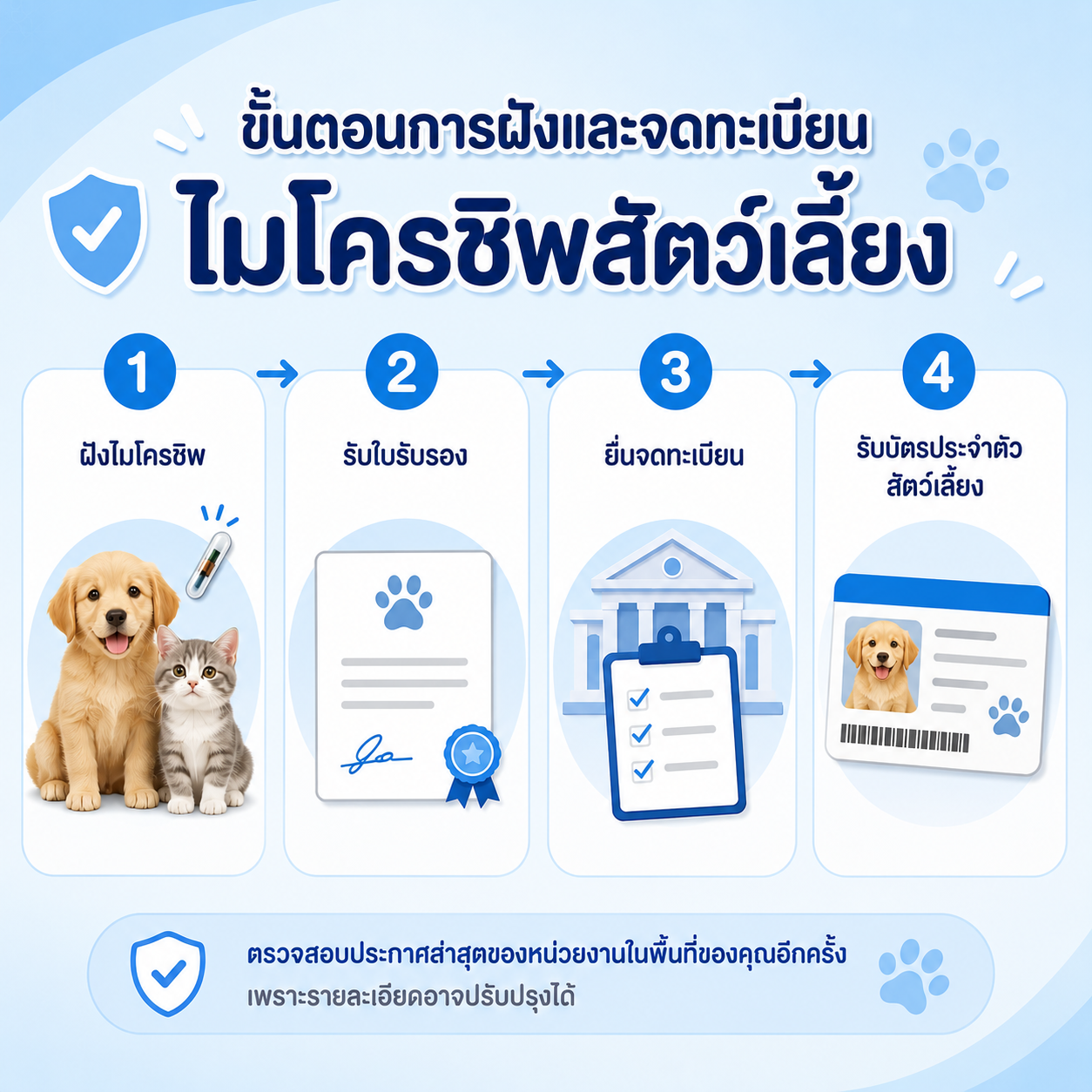
대략적인 절차는 다음과 같습니다: 마이크로칩 장착 → 인증서 수령 → 등록 신청서 제출 → 반려동물 신분증 수령. 세부 사항은 업데이트될 수 있으므로 거주하시는 지역의 관계 당국의 최신 공고도 확인하시는 것이 좋습니다.
반려동물 마이크로칩 시술 전 준비 사항
AnyVet 마이크로칩 이식을 최대한 원활하고 안전하게 진행하기 위해 보호자분들은 다음과 같이 준비해 주셔야 합니다.
가이드라인인 생후 6~8주 및 약 500g 이상의 기준을 충족하는지 연령과 체중을 확인합니다.
해당 기간 동안 질병, 발열, 설사 등이 없이 반려동물이 건강해야 합니다.
면역력이 떨어지는 것을 방지하기 위해 시술 1~2일 전에는 목욕을 피합니다.
마지막 백신 접종과 동시에 이식 일정을 잡습니다. 예방접종 날에 마이크로칩 시술을 함께 진행하면 반려동물이 병원 방문으로 받는 스트레스 횟수를 줄일 수 있습니다.
기준을 충족하고 ISO/ICAR 인증 마이크로칩을 사용하는 신뢰할 수 있는 병원이나 클리닉을 선택합니다.
마이크로칩 시술 후 반려동물 관리 방법
일상생활: 시술 후 반려동물은 평소와 같이 생활할 수 있으며 특별한 회복 시간은 필요하지 않습니다.
증상 관찰: 시술 후 1~2일 동안은 이식 부위(보통 목 뒤쪽 피부)를 관찰하여 부종, 발적, 염증 또는 비정상적인 분비물/출혈이 없는지 확인합니다.
목욕: 바늘 구멍이 완전히 밀봉되어 먼지가 들어가 감염을 일으키는 것을 방지하기 위해 약 3~7일 동안(또는 수의사의 지시에 따라) 목욕과 수영을 피합니다. 이 기간 동안 반려동물이 더러워지면 반려동물용 물티슈나 젖은 수건을 사용하여 해당 부위만 닦아내십시오.
주의해야 할 사항:
긁거나 비비지 않도록 주의합니다. 반려동물이 이식 부위를 긁거나 발로 만지거나, 바닥이나 벽에 세게 비비지 않도록 하십시오.
격렬한 놀이를 피합니다. 마이크로칩이 제자리에서 벗어나는 것을 방지하기 위해 첫 1~2일 동안은 과도한 활동이나 뛰어놀기는 자제해 주십시오 (조직이 아물어 칩을 먼저 고정할 때까지 기다립니다).
강한 압력을 피합니다. 해당 부위를 잡거나, 누르거나, 쥐어짜거나, 마사지하지 마시고, 새로 이식한 부위를 압박할 정도로 꽉 조이는 목줄이나 가슴줄은 피하십시오.
장기적인 확인: 매년 수의사에게 마이크로칩의 작동 상태를 스캔하여 확인받으십시오(매년 정기 예방접종 시 동시에 진행할 수 있습니다).
정보 업데이트: 반려동물을 유실했을 때 실질적으로 되찾을 수 있도록, 마이크로칩 데이터베이스에 있는 소유자의 연락처 정보(전화번호 및 주소 등)를 항상 최신 상태로 유지하십시오.
자주 묻는 질문(FAQ)
Q: 강아지나 고양이가 마이크로칩을 장착할 수 있는 가장 어린 연령은 언제인가요?
A: 일반적으로는 생후 6~8주부터 이식이 가능하지만, 안전성을 극대화하기 위해 생후 8주(약 2개월) 이상 및 체중이 약 500g 이상이 된 시점부터 시술하는 것을 권장합니다.
Q: 마이크로칩 시술은 통증이 심하거나 위험한가요?
A: 위험하지 않습니다. 마이크로칩 이식은 예방접종과 유사하게 간단한 시술이며 몇 분 밖에 걸리지 않습니다. 또한 칩은 국제 표준을 충족하며 30년 이상 전 세계적으로 사용되어 왔으므로 수의사가 시술할 경우 매우 안전한 것으로 간주됩니다.
Q: 예방접종과 마이크로칩 시술을 동시에 진행할 수 있나요?
A: 네, 가능하며 병원 방문 횟수를 줄이고 반려동물의 스트레스를 낮추기 위해 마지막 백신 접종과 동시에 진행하는 것을 적극 추천해 드립니다.
Q: 개나 고양이 외의 다른 동물도 마이크로칩을 장착할 수 있나요?
A: 네, 가능합니다(예를 들어 AnyVet 마이크로칩은 국제 표준 칩으로 다양한 종류의 동물에 사용될 수 있습니다). 단, 반려동물의 품종 및 크기에 따른 적합성을 평가하기 위해 사전에 수의사와 먼저 상담을 진행하셔야 합니다.
Q: 반려동물이 이미 성견/성묘이고 마이크로칩을 장착한 적이 없다면 이미 늦었나요?
A: 반려동물이 건강하다면 연령에 관계없이 언제든 마이크로칩을 이식할 수 있으며 최대 연령 제한은 없습니다. 일찍 할수록 안전성이 보장되며 반려동물을 유실했을 때 빠르게 재회할 가능성이 커집니다.
결론
반려동물은 생후 6~8주 이상 및 체중 약 500g 이상이 되면 AnyVet 마이크로칩을 안전하게 장착하기 시작할 수 있습니다. 반려동물이 건강할 때 시술받는 것이 가장 좋으며, 마지막 백신 접종 시기에 맞추어 예약하는 것을 추천합니다. 방콕에 거주 중이시라면 생후 120일 이내 또는 입양 후 30일 이내에 시술해야 하는 규정 기한을 잊지 마십시오. ISO/ICAR 표준 칩과 AnyVet의 온라인 등록 시스템을 통해 조기에 마이크로칩을 장착하는 것은 소중한 반려동물의 장기적인 안전을 보장하기 위한 첫걸음입니다.
참고: 본 정보는 일반적인 가이드라인입니다. 반려동물 개인별 적합성을 평가하기 위해서는 수의사와 상담하시기 바랍니다.
🌐 마이크로칩 정보 확인 및 문의: microchip.anyvet.ai
✨ 반려동물의 안전은 세심한 관심에서부터 시작됩니다.
👉🏻[반려동물 정보 조회 및 로그인을 위해 여기를 클릭하세요]


