
အိမ်မွေးတိရစ္ဆာန် ဆေးဝါးကုသစရိတ်များ ကြီးမြင့်ပါသလား။ "ငါ့အနီးရှိ တိရစ္ဆာန်ဆေးကုဆရာဝန်" ထံမှ ကုန်ကျစရိတ်များကို ခန့်မှန်းနည်းများအပြင်

အိမ်မွေးတိရစ္ဆာန် ကျန်းမာရေးစောင့်ရှောက်မှုတွင် ငွေကြေးဆိုင်ရာ စီမံချက်များ အဘယ်ကြောင့် လိုအပ်သနည်း
ကျွန်ုပ်တို့အများစုသည် ခွေးနှင့်ကြောင်များကို စစ်မှန်သောမေတ္တာဖြင့် မွေးမြူကြသည်။ သို့သော် ၎င်းတို့ ရုတ်တရက် ဖျားနာလာသောအခါတွင် ကျွန်ုပ်တို့၏ခေါင်းထဲသို့ ပထမဆုံးပေါ်လာသော မေးခွန်းမှာ: "ကုသစရိတ် ကြီးမြင့်မည်လား။ ငွေဘယ်လောက် ပြင်ဆင်ထားသင့်သလဲ" ဟူ၍ ဖြစ်သည်။
အမှန်တရားမှာ ထိုင်းနိုင်ငံရှိ အိမ်မွေးတိရစ္ဆာန် ဆေးဝါးကုသစရိတ်များသည် အလွန်အမင်း ကွာခြားမှုရှိသည်။ အထွေထွေကျန်းမာရေးစစ်ဆေးမှုအတွက် ဘတ်ငွေအနည်းငယ်မှစ၍ ရှုပ်ထွေးသော ခွဲစိတ်မှုများအတွက် ဘတ်ငွေသိန်းပေါင်းများစွာအထိ ရှိနိုင်ပါသည်။ ဤမျှ ကျယ်ပြန့်သော ဈေးနှုန်းကွာဟချက်သည် တိရစ္ဆာန်ဆေးရုံအမျိုးအစား၊ တည်နေရာနှင့် တိရစ္ဆာန်၏ သီးသန့်ရောဂါအခြေအနေအပေါ်တွင် များစွာမူတည်နေပါသည်။
ဤဆောင်းပါးက သင့်အိမ်မွေးတိရစ္ဆာန်ကို တိရစ္ဆာန်ဆေးကုဆရာဝန်ထံ မခေါ်သွားမီ ကုန်ကျစရိတ်များကို တိကျစွာ ခန့်မှန်းနည်းအပြင် သင့်အိမ်အနီးရှိ ကုန်ကျစရိတ်အသက်သာဆုံး တိရစ္ဆာန်ဆေးရုံကို ရွေးချယ်ရန် အကြံပြုချက်များကို လမ်းညွှန်ပေးပါမည်။
ထိုင်းနိုင်ငံရှိ အိမ်မွေးတိရစ္ဆာန် ဆေးဝါးကုသစရိတ် ပျမ်းမျှ
တိရစ္ဆာန်စောင့်ရှောက်မှုနှင့် ကုသမှုစရိတ်များသည် ရောဂါအမျိုးအစား၊ ကုသမှုအမျိုးအစားနှင့် ရွေးချယ်ထားသော ဆေးဘက်ဆိုင်ရာဌာနအပေါ် မူတည်၍ ကွာခြားပါသည်။ အိမ်မွေးတိရစ္ဆာန်ပိုင်ရှင်များ ရင်ဆိုင်ရလေ့ရှိသော အဖြစ်အများဆုံး ကုန်ကျစရိတ်များမှာ:
အထွေထွေ ကျန်းမာရေးစစ်ဆေးခ (OPD)
သွေးစစ်ဆေးခြင်း
အာထရာဆောင်း ရိုက်ခြင်း
ကာကွယ်ဆေး ကုန်ကျစရိတ်
သന്ധာပြုခြင်းနှင့် မျိုးအောင်ခြင်း ကုန်ကျစရိတ်
ခွဲစိတ်မှုများ သို့မဟုတ် အထူးကုသမှုများနှင့် ပတ်သက်သော ကုန်ကျစရိတ်များ
ယေဘုယျအားဖြင့် နှစ်စဉ် ကျန်းမာရေးစစ်ဆေးမှုများ၊ အချိန်ကိုက် ကာကွယ်ဆေးထိုးခြင်းနှင့် ကြိုတင်ကာကွယ်စောင့်ရှောက်မှုများသည် အဆင့်မြင့်ရောဂါများကို ကုသခြင်း သို့မဟုတ် အရေးပေါ်ဝင်ရောက်စွက်ဖက်မှု လိုအပ်သော နောက်ကျရောဂါ အရေးပေါ်အခြေအနေများနှင့် ရင်ဆိုင်ရခြင်းထက် ကုန်ကျစရိတ် အများကြီး သက်သာပါသည်။
ကုန်ကျစရိတ်များကို ကြိုတင်မေးမြန်းခြင်း၊ ရရှိနိုင်သော ရွေးချယ်စရာများကို နှိုင်းယှဉ်ခြင်းနှင့် သင့်အိမ်မွေးတိရစ္ဆာန်များကို ပုံမှန်ကျန်းမာရေးစစ်ဆေးမှုများ ပြုလုပ်ပေးခြင်းဖြင့် သင့်ဘတ်ဂျက်ကို ပိုမိုထိရောက်စွာ စီမံကိန်းချနိုင်ရန် ကူညီပေးပါမည်။ အရေးကြီးဆုံးမှာ သင်ချစ်ရသော အဖော်များသည် အစောပိုင်း အဆင့်များမှစ၍ သင့်လျော်သော စောင့်ရှောက်မှုကို ရရှိစေရန် သေချာစေပါသည်။
တိရစ္ဆာန်ကုသမှု ကုန်ကျစရိတ်ကို ဆုံးဖြတ်ပေးသည့် အဓိက အကြောင်းရင်း ၅ ချက်
၁။ တိရစ္ဆာန်ဆေးရုံ အမျိုးအစား
ထိုင်းနိုင်ငံရှိ တိရစ္ဆာန်ဆေးရုံများကို ယေဘုယျအားဖြင့် အဓိက အဆင့် ၃ ဆင့် ခွဲခြားထားပြီး ဈေးနှုန်းအပေါ် တိုက်ရိုက် သက်ရောက်မှုရှိသည်:
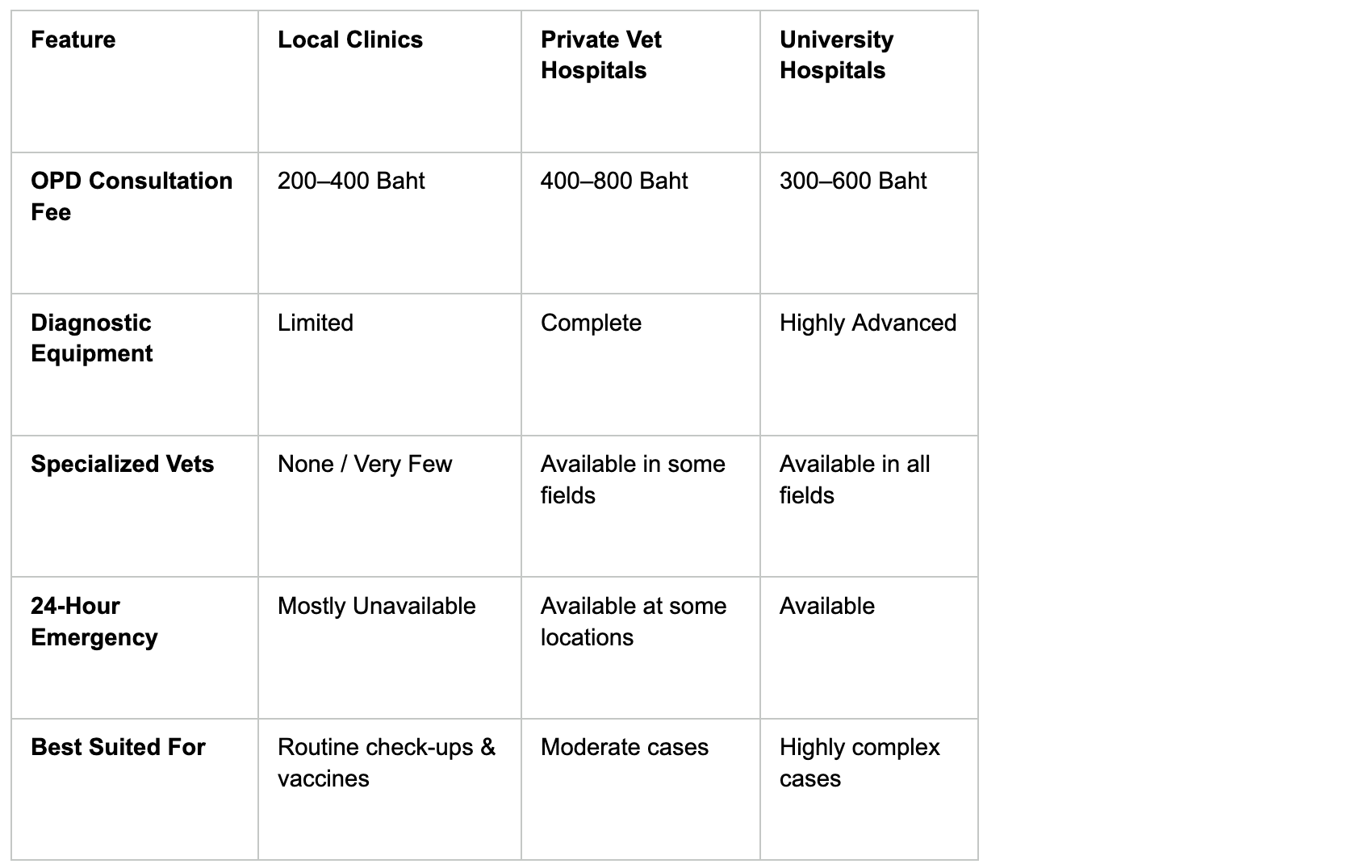
ဒေသန္တရ တိရစ္ဆာန်ကုသခန်းများ: ဘတ်ဂျက်နှင့် ကိုက်ညီသော တိုင်ပင်ဆွေးနွေးခ။ ပုံမှန်စစ်ဆေးမှုများ၊ ကာကွယ်ဆေးထိုးခြင်းနှင့် အခြေခံဖျားနာမှု ကုသမှုများအတွက် အကောင်းဆုံးဖြစ်သည်။ သို့သော်လည်း အဆင့်မြင့် ကိရိယာများ ကန့်သတ်ချက် ရှိနိုင်သဖြင့် ရှုပ်ထွေးမှုမရှိသော ကိစ္စရပ်များအတွက် အသင့်တော်ဆုံး ဖြစ်သည်။
အထွေထွေ ပုဂ္ဂလိក တိရစ္ဆာန်ဆေးရုံများ: ပိုမိုပြည့်စုံသော ကိရိယာများနှင့် အချို့သော အထူးကုဆရာဝန်များ တပ်ဆင်ထားသည်။ ဓာတ်ခွဲခန်း စစ်ဆေးမှုများ သို့မဟုတ် ရိုးရှင်းသော ခွဲစိတ်မှုများ လိုအပ်သော ကိစ္စရပ်များအတွက် သင့်လျော်သည်။
အထူးကု ဆေးရုံများ / သင်ကြားရေး ဆေးရုံများ: ဤနေရာများသည် ဈေးနှုန်းအမြင့်ဆုံးဖြစ်သော်လည်း နယ်ပယ်အားလုံးမှ အထူးကုဆရာဝန်များ (ဥပမာ- နှလုံးရောဂါ၊ အာရုံကြောပညာ၊ ကင်ဆာပညာ) ဖြင့် ဝန်ထမ်းခန့်ထားသည်။ တက္ကသိုလ်အခြေစိုက် သင်ကြားရေးဆေးရုံများသည် သုံးစွဲရလွယ်ကူပြီး တတ်နိုင်သော ဈေးနှုန်းများကို ပေးဆောင်သော်လည်း လူနာပမာဏ များပြားမှုကြောင့် စောင့်ဆိုင်းချိန် ရှည်လျားမှုကို ရင်ဆိုင်ရနိုင်သည်ောင်။
ဥပမာများ ပါဝင်သည်: သေးငယ်သော တိရစ္ဆာန်သင်ကြားရေးဆေးရုံ (ချူလာလောင်ကွန်း တက္ကသိုလ်)၊ တိရစ္ဆာန်ဆေးပညာဌာန (မဟီដိုလ် တက္ကသိုလ်) နှင့် ကာဇတ်တား တက္ကသိုလ် တိရစ္ဆာန်ဆေးပညာ သင်ကြားရေးဆေးရုံ (တိပိမာန်)။
၂။ တည်နေရာ
ဒေသတွင်း နေထိုင်မှုစရိတ်သည် ဈေးနှုန်းသတ်မှတ်ရာတွင် တိုက်ရိုက်အခန်းကဏ္ဍမှ ပါဝင်ပါသည်။ ဥပမာအားဖြင့်၊ သုခဝိထ်၊ သောင်လို သို့မဟုတ် ပရီမီယံ ရှော့ပင်းစင်တာများကဲ့သို့သော အဓိကနေရာများရှိ တိရစ္ဆာန်ဆေးရုံများသည် မြို့ပြဆင်ခြေဖုံးဇုန်များတွင် တည်ရှိသောဆေးရုံများထက် ၃၀ မှ ၆၀ ရာခိုင်နှုန်း ပိုမိုမြင့်မားသော အခကြေးငွေ ကောက်ခံလေ့ရှိသည်။
၃။ အရေးပေါ်အခြေအနေ (အရေးပေါ် vs ရက်ချိန်း)
ပုံမှန်ဖွင့်ချိန်ပြင်ပတွင် အရေးပေါ်ကုသမှုခံယူခြင်းသည် ဆေးရုံပေါ်မူတည်၍ ဘတ် ၅၀၀ မှ ၂,၀၀၀ အထိ ရှိနိုင်သော အရေးပေါ်ကြေး (Emergency Fee) သို့မဟုတ် နာရီပိုင်းလွန်ကြေး (After-hours Fee) ဟု မကြာခဏ စာရင်းသွင်းထားသည့် အပိုကြေးတစ်ခုကို ဖြစ်စေသည်။
၄။ တိရစ္ဆာန်၏ အရွယ်အစားနှင့် မျိုးဗီဇ
တိရစ္ဆာန်ကြီးများသည် ဆေးပမာဏ ပိုမိုလိုအပ်ပြီး ၎င်းသည် အသေးစားအိမ်မွေးတိရစ္ဆာန်များနှင့် နှိုင်းယှဉ်ပါက ခွဲစိတ်မှုနှင့် အလုံးစုံကုသမှုစရိတ်များကို တိုးပွားစေသည်။ ထို့အပြင်၊ ထူးခြားသော ခန္ဓာဗေဒဆိုင်ရာ တည်ဆောက်ပုံများရှိသော အချို့သောမျိုးစိတ်များ—ဥပမာ ဖရန်ချ်ဘူဒေါ့ သို့မဟုတ် ပါရှားကြောင်များကဲ့သို့ မျက်နှာပြားမျိုးစိတ်များ (brachycephalic)—သည် မေ့ဆေးနှင့် ခွဲစိတ်မှုကာလအတွင်း ပိုမိုမြင့်မားသော အန္တရာယ်များနှင့် ရင်ဆိုင်ရကာ ကုန်ကျစရိတ်များကို မြင့်တက်စေသည်။
၅။ တိရစ္ဆာန်ဆေးကုဆရာဝန်၏ အတွေ့အကြုံနှင့် ကျွမ်းကျင်မှု
နိုင်ငံတကာ သင်တန်းများကို ပြီးမြောက်ခဲ့သော သို့မဟုတ် အဆင့်မြင့် အသိအမှတ်ပြုလက်မှတ်များ ရရှိထားသော အထူးကုတိရစ္ဆာန်ဆေးကုဆရာဝန်များသည် အထွေထွေဆရာဝန်များထက် ပိုမိုမြင့်မားသော ဝန်ဆောင်မှုခကို ကောက်ခံကြသည်။ သို့သော်လည်း ၎င်းတို့၏ ကျွမ်းကျင်မှုသည် အလွန်တိကျမှု လိုအပ်သော ရှုပ်ထွေးသော ကိစ္စရပ်များအတွက် တန်ဖိုးမဖြတ်နိုင်ပေ။
ဒေသတွင်း တိရစ္ဆာန်ဆေးရုံမှ ဈေးနှုန်းများကို ခန့်မှန်းနည်း
အဆင့် ၁။ "ငါ့အနီးရှိ တိရစ္ဆာန်ဆေးရုံ" ကို ရှာဖွေပါ
သင့်ဧရိယာအတွင်း ရွေးချယ်စရာများကို ရှာဖွေရန် ဤနည်းလမ်းများကို အသုံးပြုပါ:
Google Maps: "veterinary hospital near me" သို့မဟုတ် "vet near me" ဟု ရိုက်ထည့်ပြီး သုံးသပ်ချက် အဆင့်သတ်မှတ်ချက်များနှင့် အကွာအဝေးအလိုက် စစ်ထုတ်ပါ။
ဖေ့စ်ဘုတ်က် အုပ်စုများ (Facebook Groups): ဒေသတွင်း အိမ်မွေးတိရစ္ဆာန် ချစ်သူများအသိုင်းအဝိုင်းများသည် ပိုင်ရှင်များ၏ တကယ့်သုံးသပ်ချက်များအပေါ် အခြေခံ၍ ကောင်းသော တိရစ္ဆာန်ဆေးရုံများအတွက် အကြံပြုချက်များကို ရှာဖွေရန် အကောင်းဆုံးနေရာများ ဖြစ်သည်။
အက်ပ်များ (Ooca / PetStar / PetSmile): ဤပလက်ဖောင်းများသည် အခြေခံဈေးနှုန်းများနှင့်အတူ အိမ်မွေးတိရစ္ဆာန် ဆေးခန်းများ၏ လမ်းညွှန်စာရင်းများကို စုစည်းပေးထားသည်။
အဆင့် ၂။ ဈေးနှုန်းများကို ကြိုတင်မေးမြန်းရန် အမြဲတမ်း ဖုန်းခေါ်ဆိုပါ
မေးခွန်းများ မမေးမီ သင့်အိမ်မွေးတိရစ္ဆာန်၏ အသေးစိတ်အချက်အလက်များကို ရှင်းလင်းစွာ ပေးပါ: မျိုးစိတ်၊ အသက်၊ အလေးချိန် (သိရှိပါက) နှင့် လက်ရှိ လက္ခဏာများ။ ၎င်းက ဝန်ထမ်းများအား သင့်အတွက် အတိကျဆုံး ခန့်မှန်းချက်ကို ပေးစွမ်းနိုင်မည် ဖြစ်သည်။
မေးမြန်းရမည့် မရှိမဖြစ် လိုအပ်သော မေးခွန်းများ:
အခြေခံ OPD တိုင်ပင်ဆွေးနွေးခ ဘယ်လောက်လဲ။ (ဆေးရုံများကို နှိုင်းယှဉ်ရန် ဤအရာကို စံနှုန်းအဖြစ် အသုံးပြုပါ။)
X-ray ရိုက်ခြင်း သို့မဟုတ် သွေးစစ်ခြင်းကဲ့သို့သော အပိုစစ်ဆေးမှုများ လိုအပ်ပါက၊ စတင်သည့် ကုန်ကျစရိတ်မှာ မည်မျှလဲ။
နာရီပိုင်းလွန် သို့မဟုတ် ညဘက်တွင် သွားရောက်ပါက အရေးပေါ်ကြေး သို့မဟုတ် အခြား အပိုကြေးများ ရှိပါသလား။
ဖော်ပြထားသော လက္ခဏာများကို ထည့်သွင်းစဉ်းစားပါက၊ ရောဂါရှာဖွေခြင်းနှင့် ကုသမှုအတွက် ပုံမှန်ဈေးနှုန်း အပိုင်းအခြားမှာ မည်မျှလဲ။
အရစ်ကျပေးချေမှု အစီအစဉ်များကို ပေးဆောင်ပါသလား သို့မဟုတ် အိမ်မွေးတိရစ္ဆာန် အာမခံကို လက်ခံပါသလား။
💡 အကြံပြုချက်: နာမည်ကောင်းရှိသော တိရစ္ဆာန်ဆေးရုံတစ်ရုံသည် ဖုန်းမှတစ်ဆင့် အခြေခံကုန်ကျစရိတ် လမ်းညွှန်ချက်များကို ပေးစွမ်းနိုင်သင့်သည်။ သို့သော်လည်း တိရစ္ဆာန်ဆေးကုဆရာဝန်၏ လူကိုယ်တိုင် ရောဂါရှာဖွေစစ်ဆေးမှု မပါဘဲ တိကျသော ခန့်မှန်းချက်ကို မပေးနိုင်ဟု ဆိုပါက၊ ဤသည်မှာ လုံးဝ ပုံမှန်ပင် ဖြစ်သည်။ ဆေးဘက်ဆိုင်ရာ အသေးစိတ်အချက်အလက်များသည် ကုသမှုအစီအစဉ်နှင့် နောက်ဆုံးဘေလ်အပေါ် သိသာထင်ရှားစွာ သက်ရောက်မှုရှိသော ကိစ္စရပ်များအတွက်၊ သင်၏ ဆုံးဖြတ်ချက်ချမှုကို အထောက်အကူဖြစ်စေရန်အတွက် ပထမဦးဆုံး စစ်ဆေးမှုနှင့် ဖြစ်နိုင်ချေရှိသော နောက်ဆက်တွဲ စစ်ဆေးမှုများ၏ ဈေးနှုန်း အပိုင်းအခြားကို တောင်းဆိုခြင်းသည် အကောင်းဆုံး ဖြစ်သည်။
အဆင့် ၃။ အနည်းဆုံး ဆေးရုံ ၂-၃ ခုကို နှိုင်းယှဉ်ပါ
ပြင်းထန်သော ကိစ္စရပ် မဟုတ်ပါက၊ သင်တွေ့သည့် ပထမဆုံးဆေးရုံသို့ အسرعအမြန် မသွားမိပါစေနှင့်။ အချက်အလက်များကို နှိုင်းယှဉ်ရန် အဆင်ပြေသော နေရာရှိသော အနည်းဆုံး ဆေးရုံ ၂-၃ ခုသို့ ဖုန်းခေါ်ဆိုပါ။
ဈေးနှုန်းတံဆိပ်အပြင် ထည့်သွင်းစဉ်းစားရမည့် အကြောင်းရင်းများ:
အခြား အိမ်မွေးတိရစ္ဆာန် ပိုင်ရှင်များထံမှ သုံးသပ်ချက် အမှတ်များနှင့် တုံ့ပြန်ချက်များ။
သန့်ရှင်းမှုနှင့် ဆေးဘက်ဆိုင်ရာ စံနှုန်းများ။
တိရစ္ဆာန်ဆေးကုဆရာဝန်များနှင့် ဝန်ထမ်းများ၏ သဘောထား၊ ဆက်ဆံရေး ကျွမ်းကျင်မှုနှင့် ကျွမ်းကျင်ပိုင်နိုင်မှု။
X-ray စက်များ၊ အာထရာဆောင်း စကင်နာများနှင့် ရောဂါရှာဖွေရေး ဓာတ်ခွဲခန်းများ (Lab) ကဲ့သို့သော ဆေးဘက်ဆိုင်ရာ ကိရိယာများ ရရှိနိုင်မှု။
ဖွင့်ချိန်နှင့် အရေးပေါ် အသင့်ရှိမှု။
⚠️ အရေးကြီးသည်: သင့်အိမ်မွေးတိရစ္ဆာန်တွင် ပြင်းထန်သော လက္ခဏာများ သို့မဟုတ် အသက်အန္တရာယ်ရှိသော အရေးပေါ်အခြေအနေများ—အသက်ရှူရ ခက်ခဲခြင်း၊ သတိလစ်ခြင်း၊ အတက်ရောဂါ ဆက်တိုက်ဖြစ်ခြင်း၊ ပြင်းထန်သော မတော်တဆမှုများ သို့မဟုတ် သွေးထွက်လွန်ခြင်း—ပြသနေပါက၊ ဈေးနှုန်းများကို ထჯက်နှိုင်းယှဉ်ကာ အချိန်မဖြုန်းပါနှင့်။ အနီးဆုံး ရရှိနိုင်သော တိရစ္ဆာန်ဆေးရုံသို့ ချက်ချင်း အမြန်ပို့ဆောင်ပါ။
အဆင့် ၄။ ကုသမှုကို မအတည်ပြုမီ ခန့်မှန်းချက် တောင်းခံပါ
ဆေးရုံတစ်ခုက ရှုပ်ထွေးသော သို့မဟုတ် ကုန်ကျစရိတ်ကြီးမားသော လုပ်ထုံးလုပ်နည်းတစ်ခုကို အကြံပြုပါက၊ ဆုံးဖြတ်ချက်မချမီ ကုသမှု ခန့်မှန်းချက် (Treatment Estimate) ကို တောင်းဆိုပိုင်ခွင့် အမြဲတမ်း ရှိပါသည်။ စံချိန်စံညွှန်းမီ တိရစ္ဆာန်ဆေးရုံများသည် ဤစာရွက်စာတမ်းကို သင့်အတွက် ဝမ်းမြောက်စွာ ပြင်ဆင်ပေးပါလိမ့်မည်။
နှိုင်းယှဉ်ချက် ဇယားကွက်: တိရစ္ဆာန်ဆေးဘက်ဆိုင်ရာ ဌာန ၃ ခု
လူတို့ မကြာခဏ ထည့်သွင်းရန် မေ့တတ်သော အိမ်မွေးတိရစ္ဆာန် စောင့်ရှောက်မှု ကုန်ကျစရိတ် ဝှက်ထားချက်များ
ပိုင်ရှင်အများစုသည် ဤပုံမှန် သို့မဟုတ် ဝှက်ထားသော ကုန်ကျစရိတ်များကို လျစ်လျူရှုမိခြင်းကြောင့် နောက်ဆုံးဘေလ်ကို လက်ခံရရှိသည့်အခါ "စတစ်ကာ တုန်လှုပ်ခြင်း (sticker shock)" ကို ခံစားကြရသည်:
ဆေးစာ အစားအစာနှင့် ဆေးဝါးများ: နာတာရှည် ရောဂါများအတွက် တစ်လလျှင် ဘတ် ၂,၀၀၀ မှ ၅,၀၀၀ အထိ ကုန်ကျနိုင်သည်။
နောက်ဆက်တွဲ လည်ပတ်မှုများ: ခွဲစိတ်ပြီးနောက် သို့မဟုတ် ဆက်လက်ကုသမှု စောင့်ကြည့်ခြင်းသည် ပုံမှန်အားဖြင့် နောက်ဆက်တွဲ ရက်ချိန်း ၂-၄ ခု လိုအပ်သည်။
မေ့ဆေးခ: အချို့သော ဆေးရုံများသည် ဤအရာကို ဘတ် ၁,၅၀၀ မှ ၅,၀၀၀ အထိ သီးခြား စာရင်းပြုစုကြသည်။
ICU ပြန်လည်နာလန်ထူခန်း: သင့်အိမ်မွေးတိရစ္ဆာန်သည် အထူးကြပ်မတ်ကုသမှု စောင့်ကြည့်မှု လိုအပ်ပါက၊ တစ်ညလျှင် ဘတ် ၁,၅၀၀ မှ ၄,၀၀၀ အထိ ကုန်ကျနိုင်သည်။
ပြင်ပဓာတ်ခွဲခန်း စစ်ဆေးမှုများ: ပြင်ပဓာတ်ခွဲခန်းများသို့ ပို့ဆောင်ရမည့် အထူးရောဂါရှာဖွေရေး စစ်ဆေးမှုများသည် ၁ ရက်မှ ၃ ရက်အထိ ကြာမြင့်ပြီး အပို ထောက်ပံ့ပို့ဆောင်ရေး ကုန်ကျစရိတ်များ ပါဝင်သည်။
အိမ်မွေးတိရစ္ဆာန် ဆေးဝါးဘေလ်များတွင် ငွေစုရန် စမတ်ကျသော နည်းလမ်း ၆ ချက်
၁။ အိမ်မွေးတိရစ္ဆာန် အာမခံတွင် ရင်းနှီးမြှုပ်နှံပါ
ထိုင်းနိုင်ငံတွင် Dhipaya, Allianz Ayudhya, AXA နှင့် Cigna ကဲ့သို့သော အိမ်မွေးတိရစ္ဆာန် အကျုံးဝင်မှုကို ပေးဆောင်သော အာမခံပေးသူ အများအပြား ရှိပါသည်။ ပရီမီယံကြေးများသည် တစ်နှစ်လျှင် ဘတ် ၃,၀၀၀ မှ ၁၀,၀၀၀ ဝန်းကျင်ဖြင့် စတင်ပါသည်။ အရေးပေါ် အခြေအနေ ပေါ်ပေါက်လာပါက၊ မူဝါဒ၏ စံနှုန်းများနှင့် ကိုက်ညီသော မည်သည့် ဆေးဘက်ဆိုင်ရာဌာနတွင်မဆို အသုံးပြုနိုင်ပါသည်။
သင်၏ မူဝါဒတွင် အတည်ပြုရမည့် အရာများ:
နှစ်စဉ်နှင့် ဖြစ်ရပ်တစ်ခုချင်းအလိုက် အကျုံးဝင်မှု ကန့်သတ်ချက်များ။
ခြွင်းချက်များ (ယခင်က ရှိနှင့်ပြီးသော အခြေအနေများကဲ့သို့)။
စောင့်ဆိုင်းချိန်များ။
ကွန်ရက်တွင်းရှိ ဆေးရုံများ။
၂။ ကြိုတင်ကာကွယ်ရေး ကျန်းမာရေးစောင့်ရှောက်မှုအပေါ် အာရုံစိုက်ပါ
နှစ်စဉ် ကျန်းမာရေးစစ်ဆေးမှုများ၊ ခေတ်မီကာကွယ်ဆေးများနှင့် ပုံမှန် ပိုးသတ်ဆေး ကြိုတင်ကာကွယ်မှုများသည် စျေးနှုန်းကြီးမြင့်သော ရောဂါများ ဖြစ်ပွားနိုင်ချေကို ရေရှည်တွင် သိသိသာသာ လျှော့ချပေးပါသည်။ နှစ်စဉ် ကျန်းမာရေးစစ်ဆေးမှုတစ်ခုသည် ဘတ် ၅၀၀ မှ ၁,၅၀၀ ဝန်းကျင် ကုန်ကျပြီး ၎င်းသည် နောက်ပိုင်းတွင် ပြင်းထန်သော နောက်ဆက်တွဲပြဿနာများကို ကုသခြင်းထက် အဆပေါင်းများစွာ သက်သာပါသည်။
၃။ သင့်အိမ်မွေးတိရစ္ဆာန်များကို သന്ധာပြုပါ သို့မဟုတ် မျိုးအောင်ခြင်း ကာကွယ်ပါ
ပိုးသတ်ခြင်းသည် လမ်းဘေးတိရစ္ဆာန် လူဦးရေကို ထိန်းချုပ်ရုံသာမက သားအိမ်ပိုးဝင်ခြင်း (Pyometra) နှင့် နို့သီးခေါင်း အကျိတ်များကဲ့သို့သော ကြီးမားသော ကုသမှုဘေလ်များ ပါဝင်သည့် မျိုးပွားစနစ် ရောဂါများကိုလည်း တက်ကြွစွာ တားဆီးပေးပါသည်။
၄။ မှန်ကန်သော တိရစ္ဆာန်ဆေးဘက်ဆိုင်ရာ ဌာနအဆင့်ကို ရွေးချယ်ပါ
မတူညီသော ဌာနများသည် ကွဲပြားခြားနားသော ကုန်ကျစရိတ် တည်ဆောက်ပုံများနှင့် ဝန်ဆောင်မှု မော်ဒယ်များ ရှိသည်။ ပုဂ္ဂလိက ဆေးရုံများ၊ သင်ကြားရေး အቋအရများနှင့် ဒေသတွင်း ဆေးခန်းများတစ်လျှောက် ကုန်ကျစရိတ်များ၊ ဝန်ဆောင်မှုများနှင့် ဝန်ထမ်းများ အသင့်ရှိမှုကို နှိုင်းယှဉ်ခြင်းဖြင့် သင့်အိမ်မွေးတိရစ္ဆာန်၏ လိုအပ်ချက်များနှင့် သင့်ဘတ်ဂျက် နှစ်ခုစလုံးနှင့် ကိုက်ညီသော ဌာနတစ်ခုကို ရွေးချယ်နိုင်စေပါသည်။
၅။ အိမ်မွေးတိရစ္ဆာန် အရေးပေါ် ရန်ပုံငွေ တည်ဆောက်ပါ
သင့်အိမ်မွေးတိရစ္ဆာန်၏ ကျန်းမာရေးစောင့်ရှောက်မှုအတွက် အနည်းဆုံး ဘတ် ၁၀,၀၀၀ မှ ၃၀,၀၀၀ ကို သီးသန့် စုဆောင်းရန် အထူး အကြံပြုလိုပါသည်။ သီးသန့် အရေးပေါ် ရန်ပုံငွေတစ်ခု ရှိခြင်းက ချက်ချင်း ငွေကြေးဆိုင်ရာ ဖိအားမှ ကင်းဝေးစွာဖြင့် အရေးကြီးသော ကုသမှု ဆုံးဖြတ်ချက်များကို ချမှတ်နိုင်စေပါသည်။
၆။ အခြား ကုသမှု အစီအစဉ်များအကြောင်း မေးမြန်းပါ
အခြေအနေများစွာတွင်၊ ဆေးဘက်ဆိုင်ရာ လမ်းကြောင်းများစွာသည် မတူညီသော ဈေးနှုန်းအမှတ်များတွင် အလားတူ အောင်မြင်မှုနှုန်းများကို ပေးဆောင်ကြသည်။ သင့်တိရစ္ဆာန်ဆေးကုဆရာဝန်ကို မေးမြန်းရန် ဘယ်သောအခါမှ မတွန့်ဆုတ်ပါနှင့်: "လုံခြုံပြီး ထိရောက်ဆဲဖြစ်သော အခြား ဘတ်ဂျက်နှင့် ပိုကိုက်ညီသော ကုသမှု ရွေးချယ်စရာများ ရှိပါသလား"
မကြာခဏ မေးလေ့ရှိသော မေးခွန်းများ (FAQ)
Q: အိမ်မွေးတိရစ္ဆာန် ဆေးဝါးကုသစရိတ်များသည် လူသားတို့၏ ကျန်းမာရေးစောင့်ရှောက်မှုထက် အမှန်တကယ် ပို၍ ကြီးမြင့်ပါသလား။
A: မဖြစ်မနေ မဟုတ်ပါ။ အခြေခံ အိမ်မွေးတိရစ္ဆာန် စောင့်ရှောက်မှုသည် ယေဘုယျအားဖြင့် လူသားများ၏ ဆေးဘက်ဆိုင်ရာ အခကြေးငွေများထက် ပို၍ သက်သာပါသည်။ သို့သော်လည်း ရှုပ်ထွေးသော ခွဲစိတ်မှုများ သို့မဟုတ် အရေးကြီးသော နာတာရှည် ရောဂါများအတွက်၊ အများပြည်သူဆိုင်ရာ ထောက်ပံ့ကြေးများ မရှိခြင်းကြောင့် ကုန်ကျစရိတ်များသည် လူသားတို့၏ ပုဂ္ဂလိក ကျန်းမာရေးစောင့်ရှောက်မှုနှင့် နှိုင်းယှဉ်နိုင်သည်—သို့မဟုတ် အချို့သော အခြေအနေများတွင် ပို၍ မြင့်မားနိုင်သည်။
Q: ကျွန်ုပ်၏ အိမ်မွေးတိရစ္ဆာန်ကို တိရစ္ဆာန်ဆေးကုဆရာဝန်ထံ မည်မျှ မကြာခဏ ခေါ်သွားသင့်သနည်း။
A: ကျန်းမာသော အရွယ်ရောက်ပြီးသော အိမ်မွေးတိရစ္ဆာန်များသည် အလုံးစုံ ကျန်းမာရေးကို အကဲဖြတ်ရန်၊ ကာကွယ်ဆေးများကို လက်ရှိအတိုင်း ထားရှိရန်နှင့် ရောဂါလက္ခဏာမပြသော အခြေအနေများကို စစ်ဆေးရန် တစ်နှစ်လျှင် အနည်းဆုံး တစ်ကြိမ် ကျန်းမာရေးစစ်ဆေးမှု ခံယူသင့်သည်။ အသက်ကြီးသော အိမ်မွေးတိရစ္ဆာန်များ (ပုံမှန်အားဖြင့် အသက် ၇ နှစ်အထက်) သည် အသက်အရွယ်ဆိုင်ရာနှင့် နာတာရှည် ရောဂါများ ဖြစ်ပွားနိုင်ချေ သိသိသာသာ မြင့်တက်လာသည်နှင့်အမျှ တစ်နှစ်လျှင် နှစ်ကြိမ် (၆ လတစ်ကြိမ်) စစ်ဆေးမှုများသို့ ပြောင်းလဲသင့်သည်။
Q: အိမ်မွေးတိရစ္ဆာန် ဆေးဝါးကုသစရိတ်များကို အရစ်ကျ ပေးချေနိုင်ပါသလား။
A: ဟုတ်ကဲ့၊ ပိုကြီးသော တိရစ္ဆာန်ဆေးရုံအများအပြားသည် ပါဝင်သော ခရက်ဒစ်ကတ်များနှင့် ပူးပေါင်း၍ ၀% အတိုးနှုန်း အရစ်ကျ အစီအစဉ်များကို ပေးဆောင်ကြသည်။ အချို့မှာလည်း သင့်၏ ချက်ချင်း ငွေကြေးဆိုင်ရာ ဝန်ထုပ်ဝန်ပိုးကို သက်သာစေရန် အိမ်မွေးတိရစ္ဆာန် အာမခံ တောင်းဆိုချက်များကို တိုက်ရိုက် လုပ်ဆောင်ပေးပါသည်။ ကုသမှုမပြုလုပ်မီ ရှေ့စားပွဲတွင် ငွေပေးချေမှု အခြေအနေများကို စစ်ဆေးရန် အကောင်းဆုံး ဖြစ်သည်။
Q: ဘေလ်တစ်ခုသည် ကျွန်ုပ်၏ ငွေကြေးဆိုင်ရာ စွမ်းဆောင်ရည်ထက် ကျော်လွန်သွားပါက ကျွန်ုပ်တွင် မည်သည့် ရွေးချယ်စရာများ ရှိသနည်း။
A: ခန့်မှန်းခြေ ဘေလ်တစ်ခုသည် သင်ပေးချေနိုင်သည်ထက် ကျော်လွန်နေပါက၊ သင့်တိရစ္ဆာန်ဆေးကုဆရာဝန်နှင့် ချက်ချင်း ပွင့်လင်းစွာ ဆက်သွယ်ပါ။ ၎င်းတို့သည် ကုသမှုအစီအစဉ်ကို ကုန်ကျစရိတ်နည်းသော အဆင့်သို့ ချိန်ညှိရန် သို့မဟုတ် ငွေကြေးဆိုင်ရာ မိတ်ဖက်များမှတစ်ဆင့် အရစ်ကျ ငွေပေးချေမှု ဖြေရှင်းချက်များကို ပေးဆောင်ရန် မကြာခဏ လုပ်ဆောင်နိုင်ကြသည်။ တစ်နည်းအားဖြင့်၊ အချို့သောသူများသည် ပြင်းထန်သော ငွေကြေးအခက်အခဲများနှင့် ရင်ဆိုင်နေရသော ပိုင်ရှင်များအတွက် အရေးပေါ် ရန်ပုံငွေများကို လက်ခံကျင်းပကြ බැවින්၊ ဒေသတွင်း တိရစ္ဆာန် ကယ်ဆယ်ရေး ဖောင်ဒေးရှင်းများ၊ အကျိုးအမြတ်မယူသော အဖွဲ့အစည်းများ သို့မဟုတ် ကယ်ဆယ်ရေး အုပ်စုများကို ဆက်သွယ်နိုင်ပါသည်။ သင့်အိမ်မွေးတိရစ္ဆာန် ငယ်ရွယ်ပြီး ကျန်းမာနေဆဲအချိန်တွင် အိမ်မွေးတိရစ္ဆာန် အာမခံကို ရယူခြင်းသည် အကောင်းဆုံး တက်ကြွသော ဘေးကင်းရေး ကွန်ရက် ဖြစ်နေဆဲ ဖြစ်သည်။
နိဂုံး: အိမ်မွေးတိရစ္ဆာန် ကုသစရိတ်များသည် စီမံကိန်းချခြင်းဖြင့် ထိန်းချုပ်နိုင်သည်
အိမ်မွေးတိရစ္ဆာန် ဆေးဝါးကုသစရိတ်များသည် နားလည်နိုင်လောက်အောင် ငွေကြေးဆိုင်ရာ စိုးရိမ်ပူပန်မှုကို ဖြစ်စေနိုင်သော်လည်း၊ တက်ကြွသော သုတေသနပြုမှုနှင့် တိရစ္ဆာန်စောင့်ရှောက်မှု၏ မဟာဗျူဟာမြောက် ရွေးချယ်မှုတို့မှတစ်ဆင့် ၎င်းတို့ကို အပြည့်အဝ ထိန်းချုပ်နိုင်သည်။
ရွှေစံနှုန်း စည်းမျဉ်းမှာ သင့်အိမ်မွေးတိရစ္ဆာန် အရေးပေါ် ဖျားနာသည်အထိ တိရစ္ဆာန်ဆေးကုဆရာဝန်ထံ သွားရန် ဘယ်သောအခါမှ မစောင့်ပါနှင့်။ နှစ်စဉ် ကျန်းမာရေးစစ်ဆေးမှုများနှင့် ကြိုတင်ကာကွယ်စောင့်ရှောက်မှုကို ဦးစားပေးခြင်းက မူမမှန်မှုများကို အစောပိုင်းတွင် ဖမ်းဆုပ်နိုင်ပြီး သင့်ရေရှည် တိရစ္ဆာန်ဆေးကု ဘေလ်များကို အနည်းဆုံးဖြစ်အောင် ထိန်းသိမ်းထားစဉ် ပြန်လည်နာလန်ထူရန် အခွင့်အလမ်းများကို သိသိသာသာ တိုးမြှင့်ပေးပါသည်။ မှတ်ထားရန်: ကြိုတင်ကာကွယ်ခြင်းတစ်အောင်စသည် ကုသခြင်းတစ်ပေါင်ထက် အမြဲတမ်း ပို၍ သက်သာပါသည်။
နောက်ဆုံး အပ်ဒိတ်လုပ်သည့်ရက်: ဇွန် ၂၀၂၄ | ဤဆောင်းပါးတွင် ဖော်ပြထားသော ဈေးနှုန်းများသည် ခန့်မှန်းချက်များဖြစ်ပြီး ဆေးရုံနှင့် အချိန်ကာလပေါ် မူတည်၍ ပြောင်းလဲနိုင်သည်။
🌐 မိုက်ခရိုချစ် အတည်ပြုခြင်းနှင့် စုံစမ်းမေးမြန်းခြင်းများ: microchip.anyvet.ai
✨ အိမ်မွေးတိရစ္ဆာန် ဘေးကင်းရေးသည် အသေးစိတ်အချက်အလက်များကို အာရုံစိုက်ခြင်းဖြင့် စတင်ပါသည်။
👉🏻[သင့်အိမ်မွေးတိရစ္ဆာန်၏ အချက်အလက်များကို ရှာဖွေရန်နှင့် အကောင့်ဝင်ရန် ဤနေရာကို နှိပ်ပါ]

ရေးသားသူ


