Does Microchipping Affect Pet Health Insurance? Answers Every Pet Parent Needs to Know

What Is a Pet Microchip and Why Is It Important?
A pet microchip is a tiny electronic device, about the size of a grain of rice, implanted under a pet's skin. It contains a unique identification number used to verify the pet's identity. Operating via Radio Frequency Identification (RFID) technology, it requires no batteries or power source, allowing it to function for the pet's entire lifespan.
⚠️ Important Note: A microchip is not a GPS tracking device. Instead, it acts as a permanent "ID card" for your pet. When scanned with a compatible microchip reader, it reveals the unique ID number, which links back to the pet's and owner's registered information.
Microchipping Laws in Thailand
Currently, the Bangkok Metropolitan Administration (BMA) has established specific regulations regarding pet identification under the BMA Ordinance on the Control of Pet Rearing or Release, B.E. 2567 (2024). This law requires pet owners to follow designated guidelines, officially coming into full effect on January 10, 2027.
For other provinces, while it is not yet legally mandated, microchipping is highly recommended. It serves as an excellent tool to verify pet ownership in cases of lost pets, medical record verification, or when accessing specific veterinary services.
How Is a Microchip Implanted? Does It Hurt?
Microchipping involves using a specialized needle to insert the chip into the subcutaneous layer (just beneath the skin) of the pet. The procedure is very similar to receiving a standard injection or routine vaccine.
Pain Level: Pets generally feel only a brief, minor pinch. No downtime or recovery period is required afterward.
Side Effects: Some pets may experience minor, temporary swelling, redness, or irritation at the injection site.
Safety: Severe complications, such as the formation of abnormal lumps, are extremely rare. Overall, microchipping is a highly safe procedure when performed by a qualified veterinary professional.
Where is the microchip implanted?
For dogs and cats, the microchip is typically implanted under the loose skin between the shoulder blades. For other types of animals, the placement may vary depending on their anatomical structure.
Microchip Standards
International standard microchips and scanners—such as those complying with ICAR and ISO 11784/11785 standards—can be read by compatible devices worldwide.
While microchipping might not be mandatory in every region yet, it provides peace of mind, enhances safety, and allows owners to manage their pet's long-term records more effectively.
Does Microchipping Really Affect Pet Insurance?
The short answer is: "Yes, but it depends on the insurance provider."
Currently, pet insurance providers in Thailand have varying policies regarding microchips, which can be categorized into 3 main groups:
Group 1: Not Mandatory, But Simplifies ID Verification
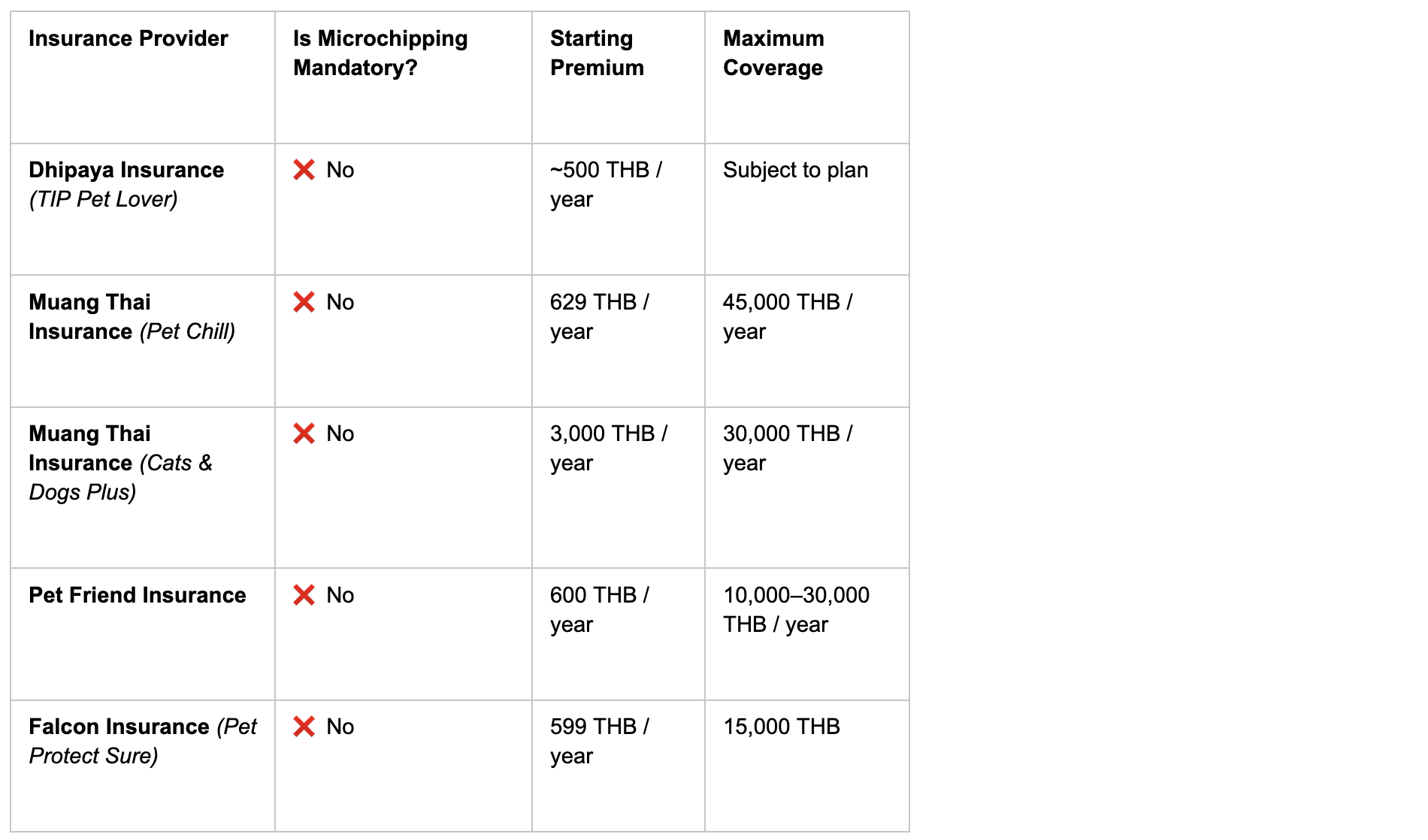
Many pet insurance providers in Thailand, such as TIP Pet Lover (Dhipaya Insurance) and Pet Friend, do not require microchipping prior to enrollment. Owners only need to provide a health certificate and vaccination records. However, having a microchip makes pet identification much faster and more accurate, which streamlines the claims process in the long run.
Group 2: Recommended for Easier Claims Tracking
If a pet goes missing and the insurance company covers related expenses (such as lost pet advertisement costs), a microchip provides indisputable proof that the recovered animal is indeed the insured pet, preventing any claims disputes.
Group 3: Increases Policy Renewal Approval
For senior pets aged 7–8 years or older, many companies require a comprehensive health check-up. Having a microchip linked to a complete medical history in a centralized database allows veterinarians and insurers to review past records instantly, paving the way for a smoother policy renewal process.
Comparing Microchip Requirements of Leading Pet Insurance Providers in Thailand

Summary: As of now, no pet insurance company in Thailand strictly mandates microchipping as a condition for application. However, the landscape is shifting rapidly, especially with the upcoming enforcement of the BMA ordinance.
5 Direct Benefits of Microchipping on Pet Insurance
Flawless Identification of the Insured Pet: One of the main challenges during insurance claims is proving that the treated animal is the exact one listed on the policy. A microchip features a globally unique 15-digit code, allowing instant verification via a quick scan.
Minimizes Claims Disputes: If a lost pet is recovered and an advertising claim is filed, the microchip leaves zero room for doubt. This minimizes red tape and speeds up reimbursement.
Comprehensive Health Record Tracking: Databases linked to microchips can store vaccination schedules, medical histories, and health conditions. Insurers and vets can use this data to evaluate coverage and policy renewals efficiently.
Prevents Pet Mix-Ups: Microchipping eliminates the risk of your pet being mixed up with another animal while staying at a clinic or animal hospital, guaranteeing that the claims submitted belong to your actual pet.
Future-Proofing for Upcoming Insurance Trends: As microchipping laws expand, it is highly likely that insurers will start making microchips a mandatory requirement or offer special premium discounts for microchipped pets—a standard practice already seen in international pet insurance markets.
The Pet Microchipping Process: Easier Than You Think
Required Documents:
Copy of the owner's ID card
Copy of the owner's house registration
Rabies vaccination certificate (issued within the last 1 year)
💡 Pro-Tip: Microchipping can be done as early as 2 months of age. Once implanted, it lasts for the pet's entire lifetime—no replacements or recharges needed!
Step 1: Health Check and Preparation
Physical Exam: The vet performs a basic check-up to ensure the pet is healthy and free of any skin infections around the injection site.
Pre-Scan: The vet scans the pet's body with a microchip reader to double-check that a chip hasn't already been implanted in the past.
Code Verification: The vet scans the new microchip before implantation to ensure the electronic code matches the barcode sticker on the packaging.
Step 2: The Implantation
Sanitization: The vet parts the fur and cleans the skin between the shoulder blades (the standard universal location) with antiseptic alcohol.
Injection: Using a syringe pre-loaded with the microchip, the vet swiftly implants it subcutaneously (under the skin).
The Experience: The sensation is identical to receiving a routine vaccine. Anesthesia is generally unnecessary unless the procedure is being done alongside spaying, neutering, or another surgery.
Step 3: Post-Implantation Check
Rescanning: After injection, the vet scans the area once more to verify that the chip is perfectly positioned and broadcasting its 15-digit code correctly.
Step 4: Data Registration (The Most Critical Step!)
Always remember that a microchip is not a real-time GPS tracker; it is an ID card. If you do not register the chip online with your contact information, the chip remains blank and useless if your pet goes missing.
Cost: Rates vary depending on the animal hospital, usually covering the microchip, implantation fee, and registration. Keep an eye out for special government campaigns offering free microchipping services!
New BMA Regulations and Their Impact on Pet Insurance
According to the Bangkok Metropolitan Administration (BMA) Ordinance on the Control of Pet Rearing or Release, B.E. 2567 (2024), dog and cat owners residing in Bangkok must systematically register and identify their pets according to these key timelines:
Existing Pets: Must be registered and microchipped by January 10, 2026. Note: The microchipping deadline has been extended by an additional year, moving the final grace period into 2027.
New Pets: Must be registered within 30 days from the date of adoption/ownership.
Newborn Pets: Must be registered within 120 days from their birth date.
Additionally, guidelines regarding the maximum number of pets allowed relative to residential space have been set to improve animal welfare, reduce the stray population, and create an effective urban pet management system.
How this links to Pet Insurance
As more pets in Bangkok enter the system with registered microchip numbers, future pet insurance companies will be able to utilize this centralized data to conduct more precise risk assessments, focusing on:
Validated pet health histories
Precise age, breed, and associated risk factors
Accurate medical treatment and claims history
This data integration will pave the way for highly accurate, customized insurance premiums tailored to individual pets, while minimizing underwriting risks stemming from incomplete data. All data usage will comply strictly with personal data protection laws (PDPA).
Frequently Asked Questions (FAQ)
Q: Can I apply for pet insurance if my pet isn't microchipped yet? A: Yes! Currently, most pet insurance companies in Thailand do not require a microchip at enrollment. However, it is always best to double-check with the provider as policies may shift alongside new local ordinances.
Q: Does a microchip make my insurance premium cheaper? A: At present, Thai insurers have not announced official discounts for microchipped pets. However, this is highly expected to become a trend in the near future once the national pet database becomes more comprehensive.
Q: How does a microchip affect claims if my pet goes missing? A: It plays a direct role. A microchip is the most foolproof proof of identity. It allows insurers to instantly verify that a recovered pet matches the covered policy, eliminating disputes and speeding up claims processing.
Q: Can a microchip store medical records? A: The microchip itself only stores a unique 15-digit code. However, that code links directly to an online database where vets and owners can update vaccination logs, medical histories, and health conditions.
Q: Do I need to renew or replace the microchip every year? A: No. A microchip lasts for your pet's entire life. It doesn't expire, degrade, or require battery charging. You only need to make sure your contact details in the central database remain up to date.
Conclusion: Microchipping + Pet Insurance — The Ultimate Smart Pet Care Duo
While microchipping is not yet a mandatory prerequisite for buying pet insurance in Thailand, its direct and indirect perks are undeniable. From foolproof identification and hassle-free medical tracking to future-proofing your pet against changing regulations, microchipping and pet health insurance are two essential components that every modern pet parent should plan together.
For pet owners in Bangkok, complying with the BMA registration rules is a wonderful step toward responsible pet ownership. And if you haven't secured pet health insurance yet, now is the perfect time to safeguard your finances against unexpected medical bills.
Ultimately, a pet backed by both a clear identity (microchip) and financial protection (insurance) is a pet truly ready for any situation.
Last Updated: June 2026
Insurance policy references source: * Dhipaya Insurance (TIP Pet Lover)
Muang Thai Insurance (Pet Chill)
Pet Friend Insurance
Falcon Insurance (TIP Insure)
For more details, check: BMA Ordinance on the Control of Pet Rearing or Release, B.E. 2567 (2024)
🌐 Microchip Verification & Inquiries:
www.anyvetmicrochip.com
✨ Pet safety begins with attention to detail.
👉🏻[Click here to search for your pet’s information and log in]