
How to tell if your dog or cat needs to see a vet

Dogs and cats can't tell us "it hurts here" or "I don't feel well," so the job of spotting symptoms falls on us as their owners. Serious illnesses often begin with small signs that are easy to overlook — and by the time we notice, it can be too late.
This article walks you through 5 key warning signs that it's time to get your pet to the vet quickly, along with how to assess the severity yourself. That way you can decide right away whether you need to urgently search for an "animal clinic near me" and get your pet the care they need.
⚠️ Note: This article is basic guidance for observing symptoms. It cannot replace a diagnosis from a licensed veterinarian. If you're unsure about how serious the symptoms are, see a vet as soon as possible.
5 Key Signs It's Time to Take Your Pet to the Vet
1. Loss of appetite or refusing water for more than 24 hours
Eating is a basic survival instinct in animals. If a normally hearty eater suddenly won't touch food for over a day or refuses to drink water, this is a warning sign you shouldn't ignore.
What to watch for:
Turning away food they normally love, even favorite treats
Drinking noticeably less — or much more — than usual
Rapid weight loss over a short period
Urgency: High — especially in young animals and cats, because a cat that goes without food for more than 2–3 days risks developing hepatic lipidosis (fatty liver disease), which can be life-threatening.
2. Ongoing vomiting or diarrhea
Vomiting or loose stool once or twice may just be from eating something disagreeable. But if it happens repeatedly within a single day or continues for several days, the body loses water and electrolytes fast, leading to dehydration.
Symptoms that mean you should go to the vet immediately:
Vomit or stool with blood in it, or that looks dark/black
Projectile vomiting that won't stop — throwing up everything they eat
Diarrhea combined with lethargy and weakness
Suspicion that they swallowed a foreign object or poison
Urgency: High — if there's blood or it's paired with lethargy, search for the nearest open animal clinic right away.
3. Lethargy or a sudden change in behavior
A pet that used to be cheerful, playful, and eager to greet you but suddenly sleeps all day, doesn't respond, and hides in quiet corners is often signaling that their body is fighting pain or an internal problem.
Watch for these behaviors:
No interest in their surroundings; no response when called
Unusual aggression when touched (possibly from pain)
Trembling, a hunched back, or an unsteady walk
Hiding away and avoiding you, unlike their usual self
Urgency: Moderate to High — especially when combined with other symptoms like not eating or having a fever.
4. Labored breathing, panting, or abnormally fast breathing
The respiratory system is a matter of seconds and life. If your pet is breathing hard or fast, or panting with their mouth open when they haven't exercised and it isn't hot, treat it as an emergency.
Danger signs that mean go to the vet right now:
Tongue or gums turning purple, blue, or pale white
Using the belly to help breathe, or stretching the neck to breathe
Wheezing or a raspy, crackly sound while breathing
Persistent coughing, especially at night
Urgency: Top-level emergency — don't wait it out. Get to the nearest clinic or animal hospital immediately.
5. Abnormal urination — straining, unable to go, or blood in urine
Urinary tract problems are very common, especially in male cats, who are at risk of urethral blockage. Left untreated for more than 24–48 hours, this can cause kidney failure and death.
Symptoms to watch closely:
Going to the litter box often but passing little or no urine
Crying out in pain while straining to urinate
Blood in the urine or an abnormal color
Excessive licking of the genital area
Urgency: Top-level emergency — if your pet (especially a male cat) cannot pass urine at all, get them to the vet urgently.
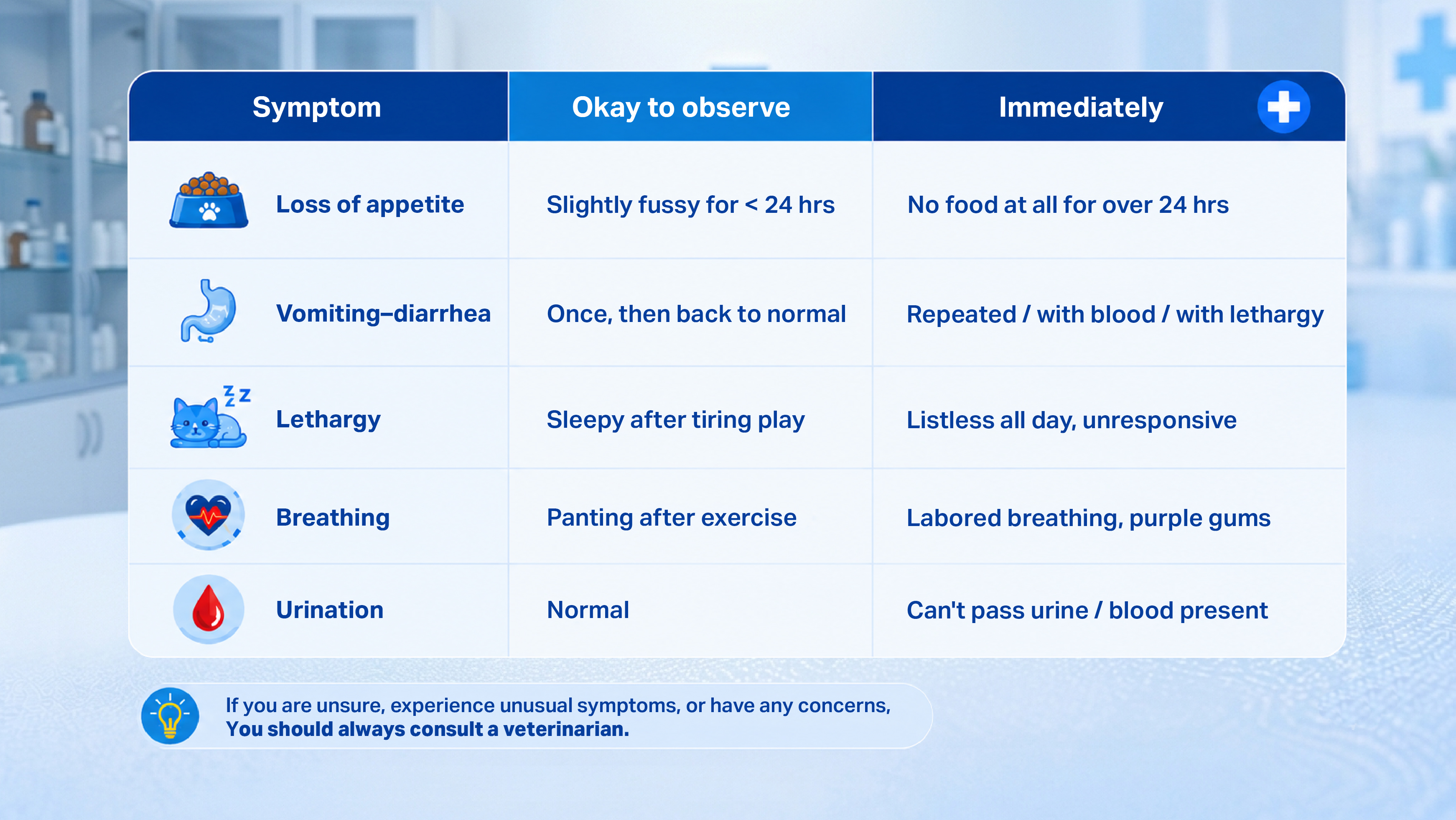
Summary Table: When to "Wait and Watch" vs. "Go to the Vet Now"
Get Ready Before Searching "Animal Clinic Near Me"
When you spot a danger sign, good preparation makes treatment smoother and faster.
Record the symptoms — when they started, how often, and what they look like, so you can give the vet full details.
Find a clinic that's open — search "animal clinic near me" or "24-hour animal hospital," and check hours and reviews.
Call ahead — especially in an emergency, so the team can be ready to receive your pet.
Prepare a pet carrier — to keep your pet safe and reduce stress during the trip.
Bring the vaccine booklet / medical history with you if you have it.
Frequently Asked Questions (FAQ)
Q: My dog skipped one meal — do I need to take them to the vet right away?
A: If they only skipped one meal but are still cheerful, drinking, and playing normally, you can keep observing. But if they don't eat for over 24 hours or show other abnormal symptoms, see a vet promptly.
Q: How do I find an animal clinic near me that's open 24 hours?
A: Search "24-hour animal clinic near me" or "animal hospital near me" on Google Maps to see the location, hours, reviews, and directions. It's a good idea to save the phone number of a nearby clinic in advance in case of an emergency.
Q: How dangerous is it when a cat can't pass urine?
A: It's an emergency, especially in male cats. Left untreated, it can cause acute kidney failure and death within 24–48 hours. See a vet immediately.
Q: Which symptoms count as the most urgent?
A: The ones that require an immediate vet visit include labored breathing, a color change in the tongue or gums, seizures, uncontrolled bleeding, and inability to urinate — all of which can be life-threatening.
Conclusion
Spotting abnormal symptoms in your pet early can improve the chances of successful treatment and reduce the risk of complications. The 5 key signs you shouldn't ignore are loss of appetite / not drinking, ongoing vomiting or diarrhea, unusual lethargy, labored breathing, and abnormal urination.
If you notice these signs, don't wait for your pet to get worse before finding a vet. Search for an "animal clinic near me" or an open animal hospital right away so your pet gets timely care — because in an emergency, every minute matters for our four-legged friends. ❤️
🌐 Microchip Verification & Inquiries: microchip.anyvet.ai
✨ Pet safety begins with attention to detail.
👉🏻[Click here to search for your pet’s information and log in]

Author


